






















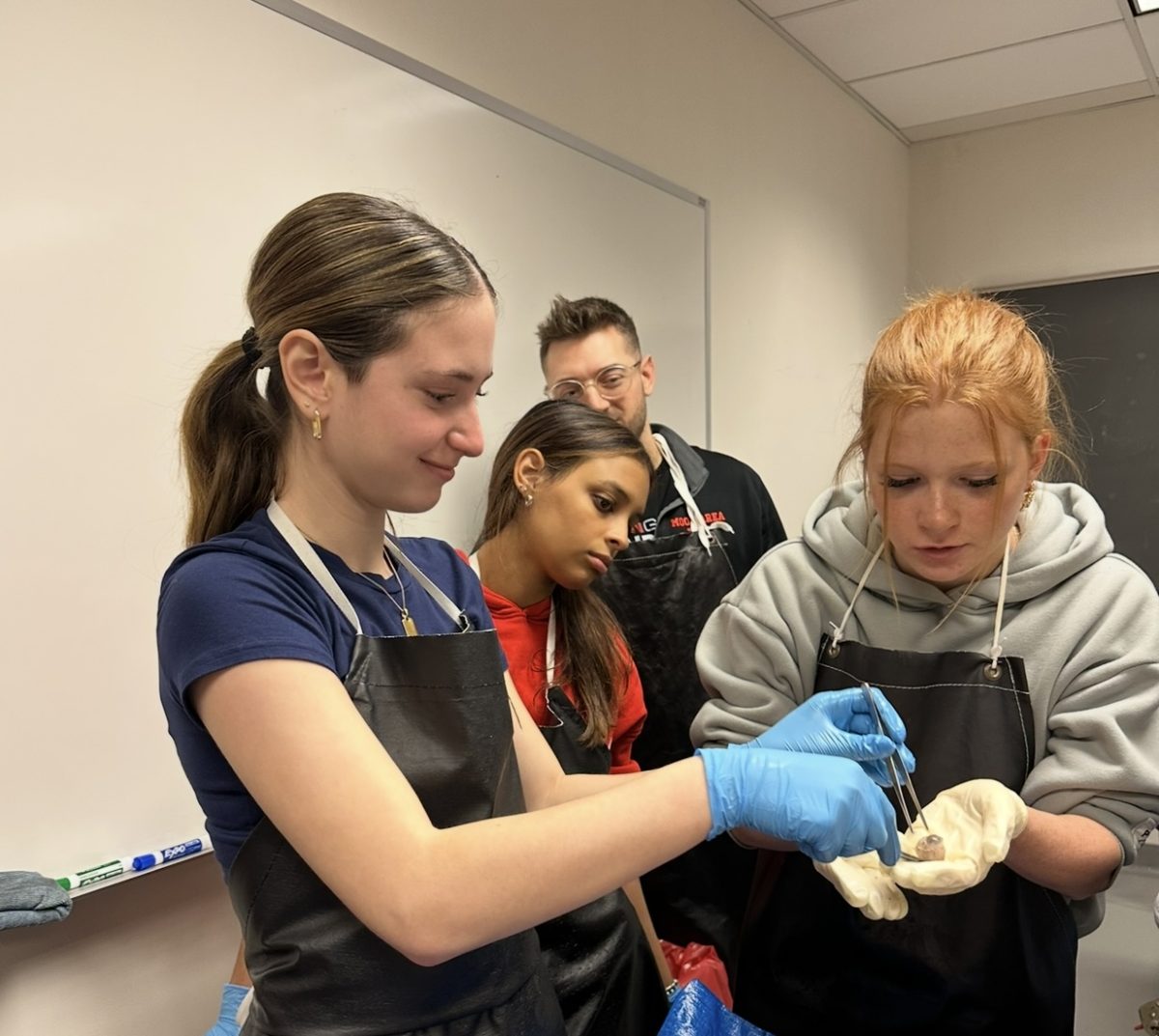

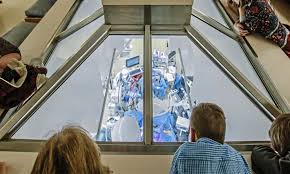
On Thursday, February 19th, Allegheny General Hospital welcomed several Moon Area High School Anatomy and AP Bio students to observe an open-heart surgery. Students watched as Dr. Stephen Bailey replaced the patient’s aortic valve, along with a section of the aorta.
Dr Stephen Bailey serves as not only a prominent cardiothoracic surgeon in the area, but also is the system chair of the Department of Thoracic and Cardiovascular Surgery at Allegheny Health Network. Dr Bailey’s educational background consists of Vanderbilt University School of Medicine (1997), his residency at University of Utah health, and a fellowship at New York Presbyterian Hospital. Through his schooling, he earned expertise in complex cardiac surgeries, including the aortic valve replacement the students saw.
As an Associate Professor of Cardiothoracic Surgery at Drexel University, he shows his students his special interest in providing second opinions, particularly for patients previously turned down for surgery. He is identified as leading heart surgeon with a notable involvement in clinical trials like PARTNER 3, which delt with aortic valve replacement with a ballon for low-risk patients. His over sixty publications with Drexel can we found online at https://researchdiscovery.drexel.edu/esploro/profile/stephen_bailey/output/all?institution=01DRXU_INST.
These values usually need replacement when they become overly diseased and damaged. Instead of helping the heart pump blood, a faulty valve can lead to leaking. Surgery is necessary to prevent further damage such as heart failure. Students first entered the room during the end of the sternotomy (the separation of the breastbone and chest). They witnessed the aorta being opened, the damaged value being removed (either with a mechanical or biological replacement- our patient witnessed had a biological one due to her age), it being carefully sutured, and the heart being restarted.
The mechanical option is chosen usually for younger patients at risk of another open-heart surgery as well as being likely to outlive a bioprosthetic value (30 years vs 10~15 years). Although medical information was kept secure, the patient, in her older seventies, was likely not a candidate for this because of her age, as well as the risks of a mechanical valve needed a blood thinner, which is not preferable for older patients at fall risks.
This field trip is available every spring through the gifted program and the science department. Spots are limited, so if interested keep your eyes peeled Spring of 2027. This is a fantastic opportunity for any student interested in the medical field. Being able to see surgery in person is fascinating and can help secure decisions for schooling as well as career interest.