
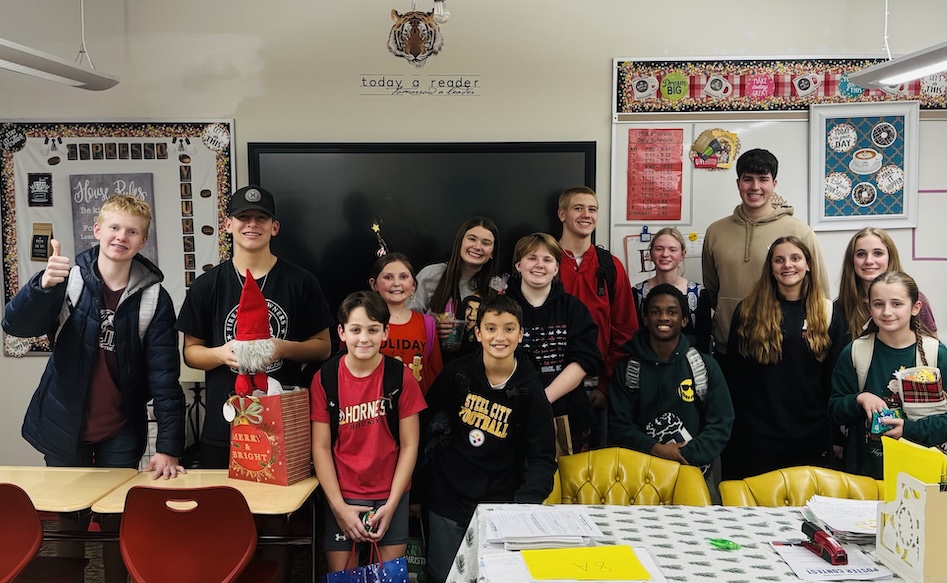












The Model United Nations club recently took a field trip to Westminster College, where students participated in a regional conference that brough together high school delegates from across western Pennsylvania. The event created an environment that closely mirrored the real United Nations, giving students the opportunity to step into the role of diplomats and engage with global issues in a hands-on setting.
At the conference, students collaborated with peers from a wide range of schools, working alongside others their age to debate, negotiate, and problem-solve. Conferences like this typically draw hundreds of participants and simulate multiple United Nations committees, allowing students to practice public speaking and diplomacy while addressing real-world topics. The experience emphasized not only competition but also cooperation, as delegates were required to build consensus and find solutions that reflected diverse perspectives.
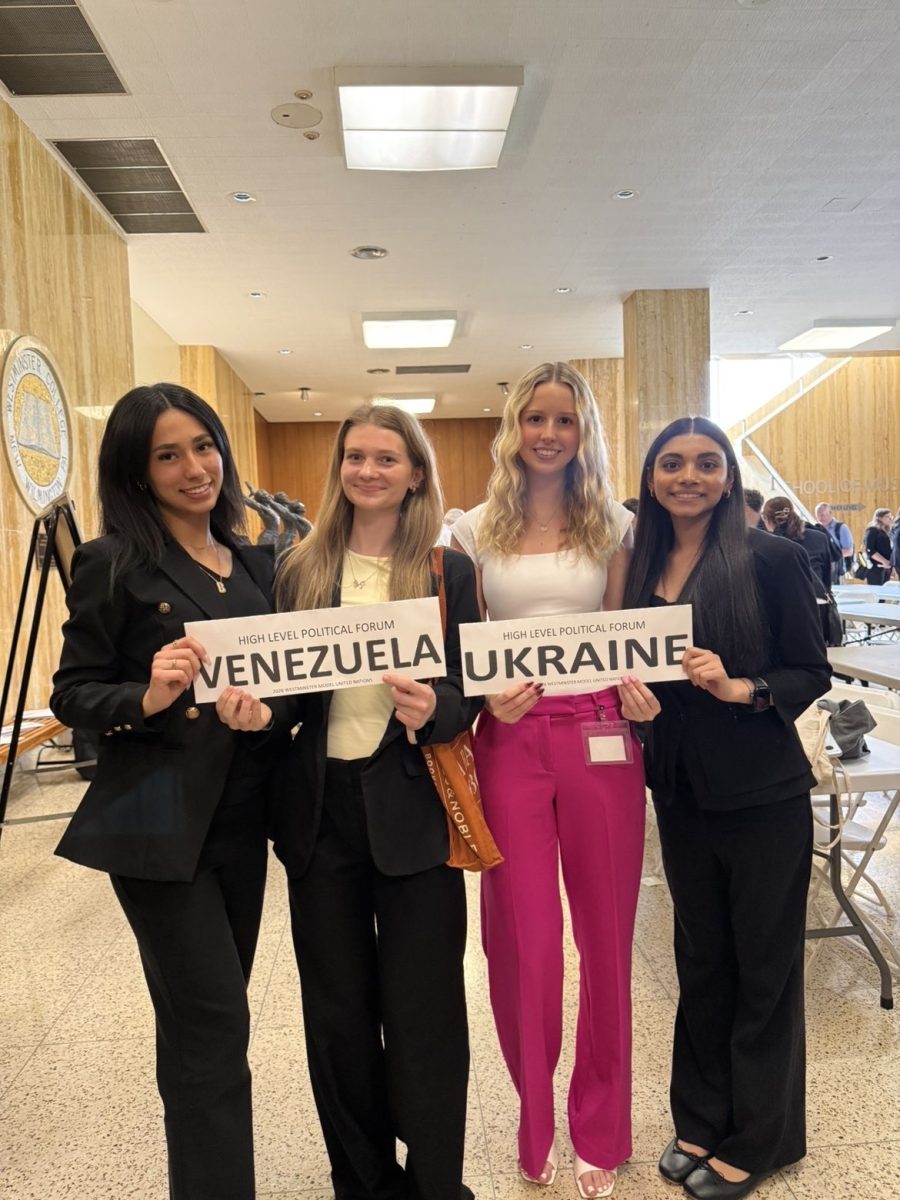
Members of the club represented countries including Ukraine and Venezuela in the High-Level Political Forum, one of the conference’s key committees. In these roles, students researched their assigned countries’ policies and positions, then used that knowledge to contribute to discussions of global challenges. Acting as official delegates, they participated in moderated debates and informal negotiations, working to ensure their country’s voice was heard.
A major part of the conference involved drafting resolutions, which are formal proposals aimed at solving international issues. Students worked in groups with delegates from other schools to write, revise, and present these documents. This process required compromise, critical thinking, and strong communication skills, as each resolution had to gain support from multiple countries in order to pass.
Other students participated in different committee rooms, each focused on its own set of global topics. Across all committees, the goal remained the same: collaborate with others, defend national interests, and ultimately produce workable solutions. This structure reflects the core purpose of Model UN, which is to help students better understand international relations while developing leadership and teamwork skills.
Overall, the trip to Westminster College was both academically enriching and socially engaging. By working with students from different schools and backgrounds, club members gained new perspectives and built connections beyond their own community. The conference highlighted the importance of diplomacy and cooperation, leaving participants with valuable experience that extends far beyond the classroom.